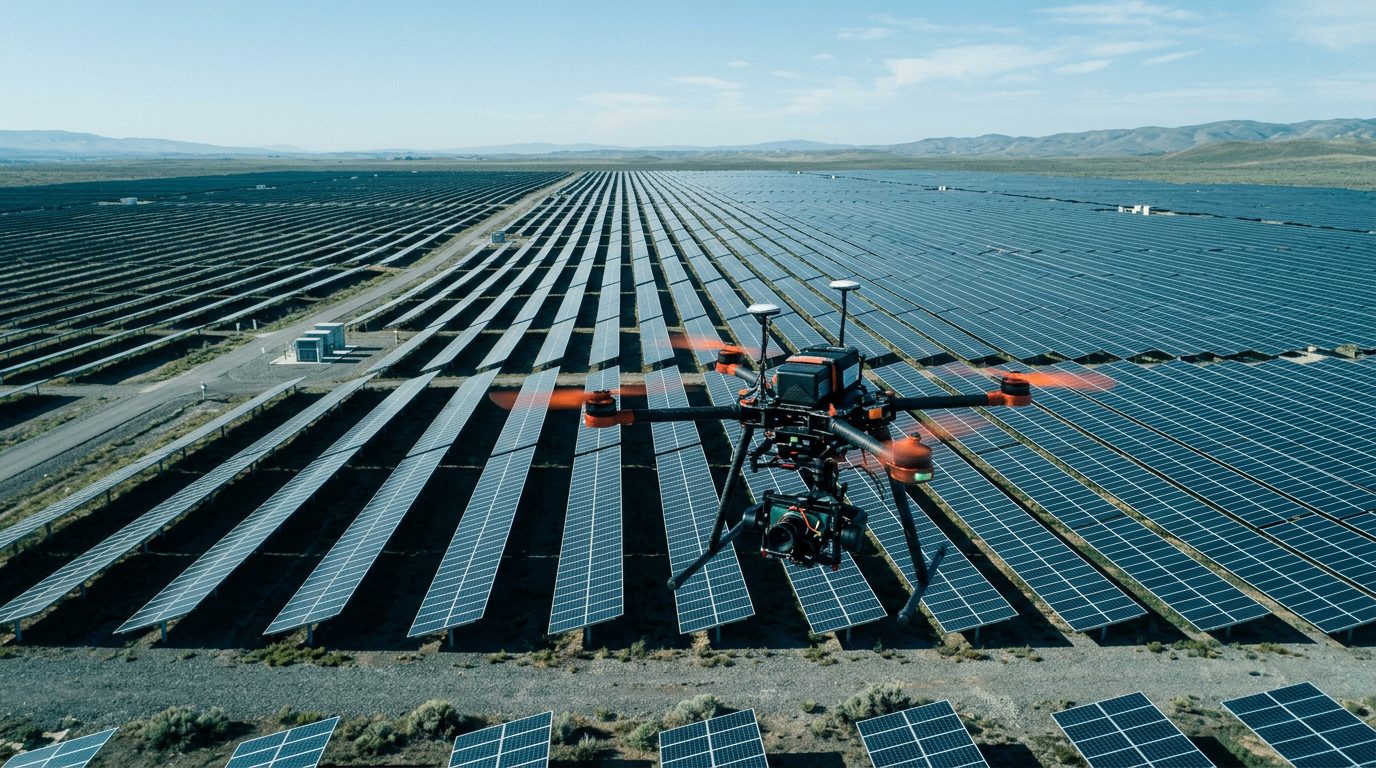
Solar Farm Thermal Inspection: A Buyer’s Guide
How radiometric thermal drone surveys find module and string faults, the conditions needed for valid data and what a good report includes.
What thermal inspection finds
Drone thermal surveys locate hotspots, bypass-diode failures, cracked or soiled modules, string and combiner faults and inverter issues across large arrays far faster than walking the rows, helping prioritise repairs and support warranty claims.
Radiometric versus qualitative
Qualitative thermal imagery shows relative temperature differences. Radiometric data records temperature values per pixel and is required when temperatures must be measured and reported. Ask for radiometric source files, not only coloured images, and evidence of the provider’s thermography workflow.
Conditions matter
Valid thermal data depends on adequate irradiance, stable weather, wind, time of day and flight parameters. Ask which thermal standard or procedure the provider follows and how they record conditions during capture.
What to ask for in the report
Anomalies classified by type and severity, located to block, row, string and module, with thermal and RGB image pairs, a summary by priority, and an export (CSV, GeoJSON or KML) that your O&M team can use to dispatch repairs.
Ready to compare providers?
Describe your project once and get quotes from suitable inspection providers.